
FREE shipping within the contiguous US! FREE shipping within the contiguous US!
Home / The Grubs Times

The Grubs Times

How Do Pre, Pro & Post biotics Help in Keeping Chickens Healthy
How Do Pre, Pro & Post biotics Help in Keeping Chickens Healthy

While raising chickens (or poultry in general) may be a fun activity, keeping your feathery friends healthy may sometimes become a challenge. 

No matter how sanitary you keep your yard, there will still be various germs and diseases that may affect your chickens health.

Aside from getting a few products known for their ability to fight off parasites and germs, you should concurrently try to strengthen your chickens health. One of the ways is to strengthen the intestinal flora aka microbiome and introduce some good bacteria to your chickens. There are three terms you should be aware of which can play an important part in rebuilding your chickens intestinal flora and strengthening their immune system.

Prebiotics 

Prebiotics, being non-digestible food ingredients, beneficially affect the host. They do this by stimulating the growth and activity of a limited number of bacteria in the colon. 

They are known for improving the GIT health of poultry. This is because the presence of prebiotics in the diet causes an increase in certain groups of GIT bacteria in the intestines of your chickens and ducks, which are considered to be beneficial to the host. 

In addition, there are various prebiotics that have helped to reduce pathogen colonization in poultry. This has decreased the incidence of infection in birds significantly. 

How to Give Prebiotics to Your Feathery Friends 

Prebiotics come from high-fiber foods, so it is pretty easy to give them to your birds. The added bonus is that they make great treats that they'll love. Here’s a list of some of the prebiotics that you can feed your poultry with: 

  • Honey
  • Berries
  • Barley 
  • Garlic
  • Black soldier fly grubs (whole dried insect)

Probiotics 

Probiotics form a barrier in the colon of your birds that prevents bad bacteria from attaching to the intestinal walls. They also encourage beneficial microflora in the intestines and prevent pathogen growth. 

The best part is that they support the immune system in general and boost growth rates in poultry. This means that your feathery friends are less likely to fall sick. 

Also, suppose you’re someone who craves an omelet for breakfast every day. In that case, you’d love to know that probiotics keep quality egg production high. Yup, they really do help in keeping your egg supply constant. 

How to Give Probiotics to Your Chickens?

There are a couple of options. The simplest would be sprinkling some brewer’s yeast or garlic powder over their feed.

You can also make probiotic rich treats for your chickens, all by yourself! Here are some of our favorite recipes: 

1. Apple Cider Vinegar

All you need is apple scraps, peels, and sugar.

  • Put the scraps in a bowl and add enough water to cover the solids.
  • Stir a quarter cup of sugar into the bowl.
  • Place something heavy (e.g., a plate) on it and cover it with a kitchen towel. 
  • Set it aside for 10 days at room temperature, after which you will use a filter to drain the liquid and remove the solids. 

If you think that the vinegar smells of alcohol or wine, put it back and wait until it starts smelling like a good vinegar.

2. Yogurt 

  • Heat the milk to 180 °F
  • Cool it to 112-115 °F
  • Add your yogurt starter (the good bacteria)
  • Mix the yogurt starter with the rest of the milk 
  • Pour the milk into jars and incubate it for 7 to 9 hours
  • Leave the jars in the fridge to allow the yogurt to cool and set

That’s how simple and easy it is to make probiotic rich treats at home! 

Postbiotics

Postbiotics can be seen as deliberately inactivated microbial cells which have similar benefits as probiotics. 

The benefits provided by postbiotics are uncountable, but we’ll present a summary of them here:

  • Improves health and growth performance
  • Promotes the immune status 
  • Optimize the intestinal microbiota 
  • Reduce pathogen pressure 
  • Support gut morphology 
  • Boost natural defences 

Sources of Postbiotics for Your Birds 

Any food fermented by live bacteria is considered to contain postbiotics. To name a few, here’s a short list:

  • Yogurt
  • Miso
  • Tempeh
  • Kimchi
  • Certain Pickles 
  • Sauerkraut

Conclusion 

The key to healthy chickens and ducks is a nutrient-rich diet, a clean coop, clean water, and most importantly, pre, pro, and post biotics. They will play a significant role in keeping your feathery friends healthy and productive. 

Not to forget, they are very easy to give to your chickens and ducks, whether it’s through commercial feed or homemade treats. And yes, your birds will make sure to thank you for them with loads of fresh eggs. 
Black Soldier Fly As Poultry Feed

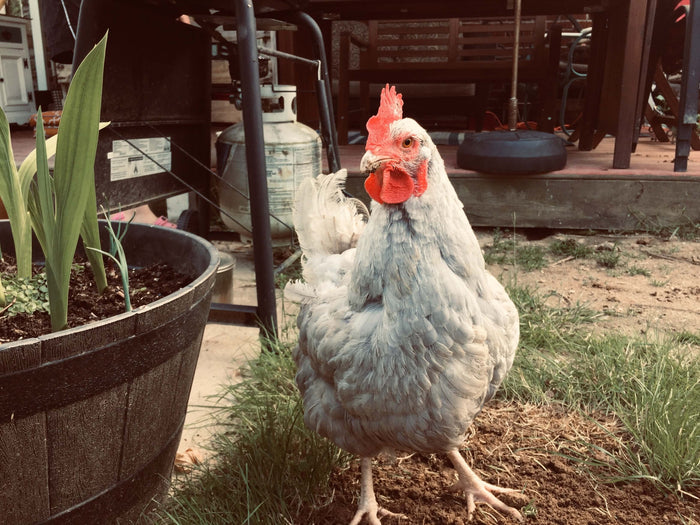
Chicken in the garden looking curious

Raising chickens can be rewarding, therapeutic, and surprisingly entertaining (the stories that you will have and be able to tell friends will be countless)! In addition to being great pets, chickens are also productive backyard friends who pay for their upkeep with delicious and healthy fresh eggs. 

Taking care of your chickens diet is extremely important. 

Protein is an essential macronutrient in a healthy diet and current commercial feeds derive it mainly from soybeans and fishmeal. We propose an alternative, or at least a replacement of some proteins in your chickens diet with black soldier fly derived protein. The quality of the protein as well as a very beneficial mineral content (high calcium, optimum calcium to phosphorus ratio), and not to mention environmental benefits, make BSF a great alternative choice.

Without further ado, jump right in to find out more about this healthy snack that your chickens will love to munch on. 

The Nutrients in BSFL

The black soldier fly larvae provide a wide range of macro and micro nutrients. Macronutrients are the fats, carbohydrates and protein whereas micronutrients are the different vitamins and minerals.

Protein

Protein is an essential component in your chickens diet. Just like in humans, it helps to build as well as restore and repair tissues. In chicken terms - this means healthier immune system, stronger feathers and better egg production (more eggs, larger eggs or both).

The protein content in BSFL ranges from 35%-45% of dried weight. But it’s not all about the quantity of protein. The amino acids lysine and methionine stand out in BSF derived protein and these amino acids are especially known for their positive impact on growth, molting support and better feed efficiency.

Fat

While you shouldn’t go overboard feeding fats to your chickens, some fat in their diet is necessary. What is particularly interesting is that BSF is known for its high lauric fatty acid content. Lauric acid has been shown to have natural antimicrobial effects. This is a very unique trait that BSF fats offer and in future may be part of the solution to limit the amount of antibiotics used in farming.

Carbohydrates

BSF provide a negligible amount of carbohydrates. But we are not saying your chickens should all go on keto and ditch the carbs. This is why if you are looking for a complete feed, you could buy whatever source of carbs your chickens prefer and top-up with the BSF for protein and some fats. BSF do provide a small amount of fibers however, ranging between 3-5% which may be beneficial to the gut flora aka microbiome. Strong gut flora with a healthy dose of good bacteria also means stronger immune system.

Calcium & Phosphorus

Calcium helps to provide the material needed to keep your chickens eggshells strong. 

Stronger eggshells are not just an aesthetic factor, you’d want your chickens to lay eggs with hard shells since such eggs are better able to keep the bacteria out. 

But it is equally important to have the right amount of Phosphorus. Phosphorus helps to metabolize or use the Calcium that the chickens eat. BSF have the perfect ratio of Phosphorus to Calcium in order to ensure optimal Calcium uptake.

How Much BSFL Is Appropriate for Your Chickens

The amount of BSFL to be fed to your chickens varies according to their age.

Baby chicks will need less BSF as treats. This is not inherent to BSF because the amount of protein needed in general at this stage is also lower. If you feed your chicks too much too soon, it may cause diarrhea and white poop. Once they outgrow this stage and especially when they start laying eggs, you should increase the amount of BSF treats. 

How Many Chickens Can One Black Soldier Fly Box Feed?

Here, we’ll assume that the box you’re purchasing is our 1.1lb Supreme Grubs 100% Non-GMO dried BSF larvae.

Dried black soldier fly larvae provides about 4500 kcal per kilogram, which means 2250 kcal for the 1.1lb box. 

An average laying hen needs about 300 kcal per day, and up to 15% of the feed can be replaced with BSF. 

After doing the math, this is the result. One 1.1lb box will last you almost two months - if you have only one chicken :) If you have 10 chickens, the grubs may be gone in 5 days. This means you’d be better off buying our 5.5lb box instead.

Conclusion 

Be creative when discovering ways to improve your chicken feed and boost the nutritional value of your eggs. Using BSFL as a feed source will give you stronger chickens and reduce the money spent on antibiotics. 

Enjoy raising your healthy chickens and happy feeding! 

How Black Soldier Fly (Hermetia illucens) can Save the Seas

People protesting against the corporations damaging the environment

The BSF don’t just transform discarded organic matter into high-quality protein feed for fish, poultry, and other industries. The waste that BSF produce while doing so can also be put to use as a highly valuable organic fertilizer. This is what a real circular and sustainable ecosystem should look like. 

How does BSF farming save life in the oceans?

First and foremost, black soldier flies do not have a negative impact on the humans or the environment - they are harmless in the sense that they don’t sting, don’t spread diseases and also don’t pose risks to the local ecosystem. 

Apart from not harming the environment they make positive contributions in helping us combat some of the results of unsustainable food and feed growing practices. Here are some of the incredible ways through which BSF saves our oceans and the life inside them: 

(1) BSF supports sustainable agriculture

Soybeans have also been used as a feed source for poultry. Growing soybeans has led to severe deforestation along with the dangerous usage of high volumes of pesticides and herbicides which outflow into our waters. Deforestation also leads to less food for the fish since less zooplankton is present.

The good news is that BSF can be used as a substitute for commercial feed. The level of inclusion, or percentage of BSF that should be used in a feed depends on the species. Generally speaking, optimal inclusion percentage for poultry varies between 5-15%. Making the switch from soybean to BSF can help our precious water resources, minimize the use of pesticides and insecticides as well as put a halt to or limit deforestation. 

(2) BSF supports sustainable aquaculture

Commercial feed is produced using fishmeal, and this is one of the reasons why we see a sharp decline in fish population across all the oceans and seas. A large amount of fish caught is used to feed other fish and not humans! It is estimated that up to 80% of fish processed to be used as fish meal can actually be used directly for human consumption. It is absurd that we’re wasting so much resources to feed fish to the fish.

(3) BSF supports waste management

The waste-management problem is a global issue. Aside from unsightly landfills, there is a serious threat from poisonous gases that the waste produces, which can be equally dangerous for humans, environment, and ultimately waters since this is where the liquefied waste ends up.

Black soldier flies have the solution to these severe problems since the larvae of BSFL thrive on decaying matter. This means that they can break down all kinds of waste (including your kitchen waste) into nutritious food for other species. 

This conserves the environment and reduces pressure on exhausted landfills, which, as a result, helps to save the seas. 

Conclusion

Black soldier flies - no matter how small - have a huge potential impact on the conservation of our environment. 

These incredible insects are super-efficient at breaking down waste material into useful products such as protein-rich feeds. Whether you’re consuming them in your diet, feeding them to your pets, using them as industrial feed substitute, or using their organic fertilizer, by supporting the BSF economy, you will be helping to save the very endangered life in oceans and seas across the globe.